
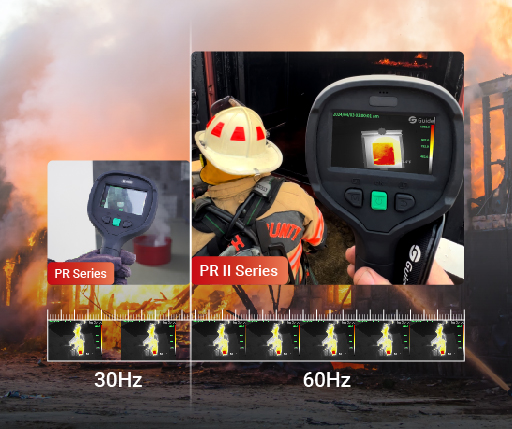
Fire emergencies are unpredictable, dangerous, and often deadly. In such critical situations, visibility is one of the biggest challenges firefighters and rescue teams face. Thick smoke, darkness, and extreme heat can make it nearly impossible to locate victims or identify hazards. This is where a fire thermal imaging camera becomes a life-saving tool. By detecting heat instead of relying on visible light, this technology allows responders to see through smoke and darkness, making rescue operations faster and more effective.
Understanding Fire Thermal Imaging Camera Technology
A fire thermal imaging camera works by capturing infrared radiation emitted by objects and converting it into a visible image. Every object with a temperature above absolute zero emits heat energy, and this energy can be detected by advanced sensors inside the camera. The result is a thermal image that highlights temperature differences, allowing users to distinguish between hot and cold areas.
In fire scenarios, this capability becomes essential. Victims trapped in smoke-filled environments can be quickly identified because their body heat contrasts with the surrounding area. Similarly, hidden fire sources behind walls or ceilings can be detected early, preventing further spread.
Enhancing Visibility in Smoke-Filled Environments
One of the most dangerous aspects of a fire is the dense smoke that reduces visibility to zero. Firefighters often have to navigate unfamiliar spaces while dealing with intense heat and limited oxygen. A fire thermal imaging camera eliminates this barrier by providing a clear heat-based view of the surroundings.
This improved visibility allows firefighters to:
Locate victims faster
Identify exits and safe pathways
Avoid obstacles and structural hazards
By enabling quick decision-making, thermal imaging significantly reduces the time required for search and rescue operations, increasing the chances of saving lives.
Faster Victim Detection and Rescue
Time is critical during a fire emergency. The longer a person remains trapped, the higher the risk of injury or death due to smoke inhalation or burns. A fire thermal imaging camera helps responders detect human heat signatures even when victims are unconscious or hidden behind objects.
This technology is particularly effective in:
Residential fires where people may be trapped in bedrooms or bathrooms
Industrial settings with large, complex layouts
Night-time incidents where visibility is naturally low
With faster detection, rescue teams can act immediately, ensuring that victims receive medical attention as quickly as possible.
Identifying Hidden Fire Sources
Fires often spread through hidden pathways such as walls, ceilings, and ventilation systems. These hidden flames can reignite even after the main fire appears to be under control. A fire thermal imaging camera helps firefighters identify these concealed hotspots by detecting abnormal heat patterns.
This capability is crucial for:
Preventing fire re-ignition
Ensuring complete extinguishment
Reducing long-term damage to property
By addressing hidden dangers early, thermal imaging technology not only saves lives during the incident but also prevents future risks.
Improving Firefighter Safety
Firefighting is one of the most hazardous professions, with risks ranging from structural collapse to sudden flare-ups. A fire thermal imaging camera plays a vital role in protecting firefighters by providing real-time information about their environment.
Key safety benefits include:
Monitoring temperature changes to avoid flashovers
Detecting weak structural areas that may collapse
Navigating safely through complex and hazardous spaces
With better situational awareness, firefighters can make informed decisions that reduce the risk of injury or fatality.
Supporting Search and Rescue Operations
Beyond firefighting, a fire thermal imaging camera is widely used in search and rescue missions. Whether it’s locating individuals in a burning building or finding survivors in low-visibility conditions, thermal imaging enhances the effectiveness of rescue teams.
In large-scale emergencies, such as warehouse fires or multi-story building incidents, this technology allows teams to cover more ground in less time. The ability to quickly scan wide areas and identify heat signatures ensures that no victim is overlooked.
Real-Time Decision Making in Critical Situations
In emergency scenarios, every second counts. A fire thermal imaging camera provides real-time visual data that helps incident commanders and firefighters make quick and accurate decisions.
For example:
Determining the safest entry points
Assessing the intensity and spread of the fire
Allocating resources more efficiently
This immediate access to information improves coordination among team members and ensures a more organized response.
Advancements in Fire Thermal Imaging Camera Technology
Modern fire thermal imaging camera devices have evolved significantly, offering enhanced features that improve performance and usability. Brands like Guide Sensmart have been at the forefront of developing advanced thermal imaging solutions tailored for firefighting and rescue operations.
Some of the latest advancements include:
Higher resolution imaging for clearer visuals
Lightweight and ergonomic designs for ease of use
Longer battery life for extended operations
Improved durability to withstand extreme conditions
These innovations ensure that firefighters have reliable tools that perform effectively in the most challenging environments.
Applications Beyond Firefighting
While the primary use of a fire thermal imaging camera is in firefighting, its applications extend to other areas that contribute to safety and risk prevention.
These include:
Fire prevention inspections to detect potential hazards
Electrical system monitoring to identify overheating components
Industrial safety checks in high-risk environments
By identifying issues before they escalate into emergencies, thermal imaging technology plays a proactive role in saving lives.
The Role of Training and Proper Usage
To maximize the benefits of a fire thermal imaging camera, proper training is essential. Firefighters must understand how to interpret thermal images accurately and use the device effectively in different scenarios.
Training programs typically focus on:
Recognizing heat patterns and anomalies
Understanding camera limitations
Integrating thermal imaging into standard operating procedures
With the right skills and knowledge, responders can fully leverage this technology to improve rescue outcomes.
Why Fire Thermal Imaging Camera Technology is a Game-Changer
The introduction of fire thermal imaging camera technology has transformed the way emergencies are handled. It has shifted firefighting from a reactive approach to a more proactive and strategic process.
Key reasons why this technology is a game-changer include:
Enhanced visibility in zero-visibility conditions
Faster and more efficient rescue operations
Improved safety for both victims and responders
Better fire detection and prevention
These benefits collectively contribute to saving lives and minimizing damage during fire incidents.
Conclusion
Fire emergencies are complex and dangerous, but advancements in technology have made it possible to tackle them more effectively. A fire thermal imaging camera is one of the most powerful tools available to firefighters and rescue teams, enabling them to see what is otherwise invisible.
From locating victims and identifying hidden fire sources to improving firefighter safety and supporting real-time decision-making, this technology plays a crucial role in life-saving operations. With continuous innovation from companies like Guide Sensmart, fire thermal imaging cameras are becoming more advanced, reliable, and accessible.