
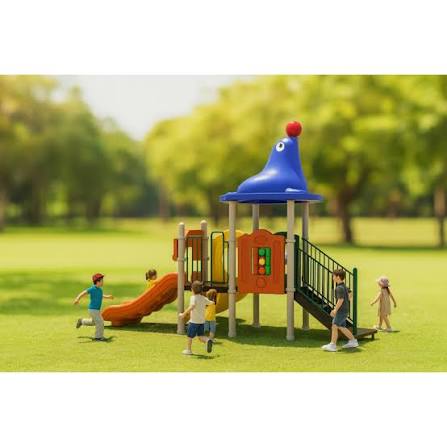
Choosing the right Commercial Playground Equipment is an important decision for schools, parks, daycare centers, recreation facilities, and other public spaces. Unlike Commercial Playground Equipment residential playgrounds, commercial play areas are designed for frequent use by many children, which means every component must be strong, safe, reliable, and capable of handling regular wear and changing weather conditions.
A well-planned playground can provide children with opportunities for physical activity, creativity, social interaction, and exploration. However, selecting equipment based only on appearance or price can lead to higher maintenance costs and safety concerns. Understanding materials, construction quality, safety features, design, and long-term value can help you make a more informed investment.
Understand Your Playground’s Requirements
Before purchasing equipment, evaluate the location and determine how the playground will be used. Consider the age groups of children who will use the space, the expected number of visitors, available area, and the types of activities you want to provide.
A playground intended for toddlers will require different structures from one designed for older children. Younger children may benefit from low slides, small climbing features, interactive panels, and easy-to-access platforms. Older children may enjoy larger climbing structures, challenging play components, bridges, and more advanced activity areas.
You should also consider whether the playground will be located in a school, public park, commercial entertainment center, residential development, or childcare facility. Each environment may have different requirements for capacity, supervision, maintenance, and accessibility.
Choose Strong and Reliable Materials
Material quality has a major impact on playground durability. Commercial playground structures are commonly manufactured using materials such as galvanized steel, powder-coated metal, high-density plastic, stainless steel, and treated wood.
Metal frames should be resistant to corrosion, especially when playground equipment is installed outdoors. Galvanized steel can provide protection against rust, while high-quality powder coating can add another protective layer and improve the appearance of the equipment.
Plastic components should also be designed for outdoor use. High-quality plastics can withstand sunlight, temperature changes, and repeated use better than low-grade alternatives. When comparing products, ask manufacturers about the material specifications and expected service life.
If wooden components are used, make sure they are appropriately treated and constructed for outdoor conditions. Poor-quality materials can crack, weaken, fade, or deteriorate more quickly, creating additional maintenance requirements.
Pay Close Attention to Construction Quality
Strong materials alone do not guarantee a durable playground. The way equipment is designed and assembled is equally important.
Inspect the structure for reinforced connection points, secure fasteners, strong joints, and stable support systems. Components that receive significant stress, such as climbing platforms, swings, ladders, and bridges, should be engineered to withstand repeated movement and heavy use.
Look for manufacturers that explain their construction methods and quality-control procedures. A reliable supplier should be able to provide technical information about the equipment rather than simply focusing on attractive designs.
Welded joints should be smooth and properly finished, while bolts and other hardware should be securely fitted. Avoid equipment with visible sharp edges, loose parts, weak connections, or poorly finished surfaces.
Consider Safety as a Top Priority
Safety should always be one of the most important considerations when selecting playground equipment. Commercial playgrounds are used by large numbers of children, so equipment should be designed to reduce foreseeable hazards.
Check for appropriate guardrails, handrails, barriers, protective edges, and safe entry and exit points. Slides should have suitable transitions and landing areas, while swings should provide adequate clearance around moving components.
The layout of the entire playground is also important. Equipment should be positioned with sufficient space between structures to help prevent collisions and allow children to move safely through the play area.
Safety surfacing is another essential consideration. Depending on the playground design and local requirements, options may include engineered wood fiber, rubber surfacing, synthetic turf, or other impact-absorbing materials. Proper surfacing can help reduce the severity of injuries from accidental falls.
Look for Weather Resistance
Outdoor playground equipment must withstand changing environmental conditions. Sunlight, rain, humidity, wind, and temperature fluctuations can gradually affect materials.
When comparing products, ask whether the equipment has UV-resistant components, corrosion protection, weather-resistant coatings, and suitable outdoor-grade materials. A playground that looks excellent when newly installed may deteriorate quickly if it is not designed for the local climate.
Consider the environmental conditions of your specific location. Areas with intense sunlight may require additional UV protection, while humid or rainy regions may need stronger corrosion-resistant finishes.
Evaluate Maintenance Requirements
Durability is closely connected to maintenance. Even high-quality playground equipment requires regular inspections and cleaning, but good design can make these tasks easier.
Ask the supplier how often the equipment should be inspected and which components may require replacement over time. Check whether replacement parts are readily available and whether individual components can be repaired without replacing an entire structure.
Equipment with complicated maintenance requirements can increase operating costs. Choosing products with accessible components, durable finishes, and straightforward inspection procedures can help simplify long-term management.
Create a routine inspection schedule after installation. Regularly check fasteners, surfaces, moving components, platforms, connections, and protective materials. Early identification of minor problems can prevent them from becoming expensive repairs.
Check Safety Standards and Certifications
Before purchasing Commercial Playground Equipment, research the safety standards and regulations that apply to your location. Different countries and regions may have specific requirements for playground design, installation, surfacing, accessibility, and maintenance.
Ask manufacturers or suppliers for documentation related to applicable safety standards, product testing, and certifications. Reliable companies should be willing to provide relevant documentation instead of making vague claims about safety.
It is also important to ensure that the installation follows the manufacturer’s instructions. Even well-designed equipment can become unsafe if it is incorrectly assembled, anchored, or positioned.
Think About Accessibility and Inclusive Play
Modern playgrounds should provide opportunities for children with different abilities to participate. Inclusive playground design can incorporate accessible pathways, ramps, transfer platforms, sensory activities, ground-level play features, and interactive components.
When selecting equipment, consider how children with different physical and developmental needs can access and enjoy the play area. An inclusive design can make the playground more welcoming while increasing its usefulness to the wider community.
Accessibility should be considered from the beginning of the planning process rather than added as an afterthought.
Compare Quality, Warranty, and Long-Term Value
Price is an important factor, but the cheapest playground equipment may not always provide the best value. A low-cost product that requires frequent repairs or early replacement can ultimately cost more than a higher-quality structure.
Compare suppliers based on material quality, construction, safety features, warranty coverage, replacement parts, installation support, and expected lifespan.
A strong warranty can provide additional confidence, particularly for large playground investments. Carefully review what the warranty covers, how long it lasts, and whether labor or replacement components are included.
Think about total ownership costs rather than focusing only on the initial purchase price. Durable equipment with lower maintenance requirements may provide better value over many years.
Select a Manufacturer You Can Trust
The manufacturer plays a major role in the quality of your playground investment. Look for companies with experience producing commercial-grade equipment and a clear commitment to quality control.
Review their product range, manufacturing capabilities, installation support, customer service, and previous projects. If possible, ask for references or examples of completed playground installations.
Communication is also important. A dependable manufacturer should be able to answer questions about customization, materials, safety, installation, maintenance, and replacement parts.
Plan for Future Growth
Your playground needs may change over time. If your facility expects increased attendance or wants to introduce new activities later, consider a modular playground system that allows additional components to be installed in the future.
Planning for expansion can make your initial investment more flexible. Instead of replacing the entire playground, you may be able to add new climbing features, slides, interactive panels, or other components as your needs develop.
Conclusion
Selecting durable Commercial Playground Equipment requires more than choosing colorful and attractive structures. You need to consider materials, construction quality, safety, weather resistance, maintenance, accessibility, certifications, warranty coverage, and long-term value.
By carefully evaluating your site and comparing reputable manufacturers, you can create a playground that remains safe, functional, and enjoyable for years. A durable playground is not simply an expense; it is a long-term investment in children’s activity, development, and community recreation.